Results
Two video sequences were used to test the algorithm. In the first video sequence the camera moves around the object. Camera movement is not abrupt and includes translation, rotation and zoom-in. Some frames from that sequence are shown below:
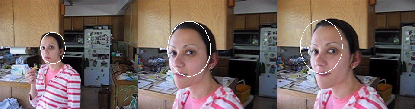
Figure 1. Frames from video sequence one showing good and bad tracking. The image on the right shows how the tracker gets distracted with the background. Click here to download video.
The two leftmost frames in Illustration 1 show good tracking of the head. The frame on the right shows a missed tacking caused by some edges in the background that 'pull' the ellipse to the left.
The second video sequence shows the subject moving around in the scene while the camera remains still. The subject performs two out of plane rotations (pitch and yaw) as well as translation and zooming. Some frames from the sequence appear below:
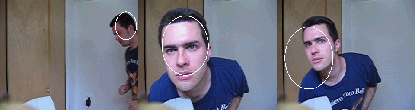
Figure 2. Frames from video sequence two showing good and bad tracking. The image on the right shows how the tracker gets distracted by the edge in the door. Click here to download video.
Again the background, in this case the edge from the door makes the ellipse lose the head and get stuck to the door. The color module tries to compensate for this by increasing the size of the ellipse. This way it still gets some face pixels. Finally it detaches from the door but does not recover in size.